How Many Babies Do Bears Have How Many Babies Do Brown Bears Have
How Many Types Of Bears Are There Living In The Earth Today?
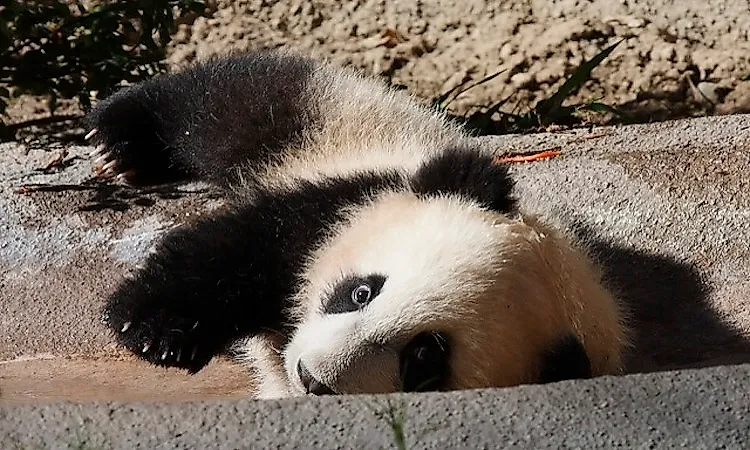
Mammals belonging to the family Ursidae are called bears. These animals are classified every bit caniforms and accept pinnipeds as their closest relatives. Today, there are only viii surviving species of bears in the world, and they are distributed widely across the world. With the exception of Antarctica and Commonwealth of australia, bears occur in all other continents of the world.
8. Dominicus Bear
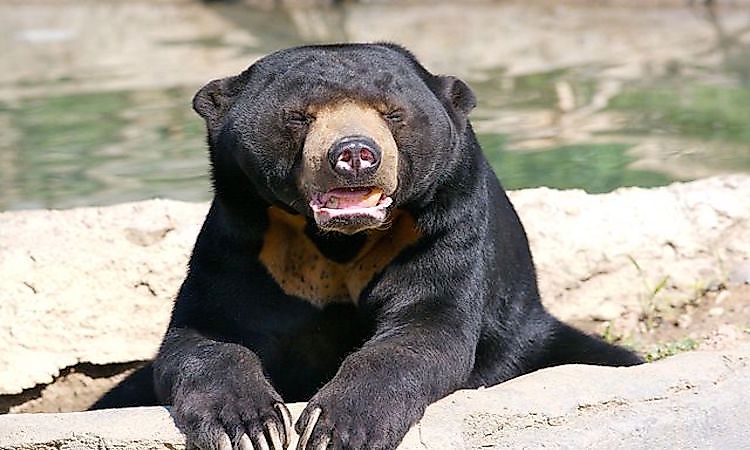
The sun acquit (Helarctos malayanus) lives in the tropical forests of Southeast Asia where its range includes the countries of India, Bangladesh, Myanmar, China, and Southeast Asian nations of Malaysia, Thailand, Cambodia, Vietnam, Laos, and also Indonesia. The population of these bears has, however, declined by over 30% despite their wide range. Hence, the species is classified as Vulnerable by the IUCN.
In that location are 2 subspecies of the sun bear, the H. thou. malayanus and the H. one thousand. euryspilus. The omnivore bears depend greatly on beehives and beloved for their nutrient. They also feed on insects like ants and termites, fruits, and shoots of palms, flowers, etc. Sadly, sun bears suffer great distress due to human cruelty and are captured and kept in deport bile farms in China where they are subjected to extreme cruelty. Bear bile is used in preparing traditional Chinese medicines. Sunday bears also are killed for other purposes and are captured for the pet trade. Habitat loss also leads to the decline of this species.
7. Sloth Bear
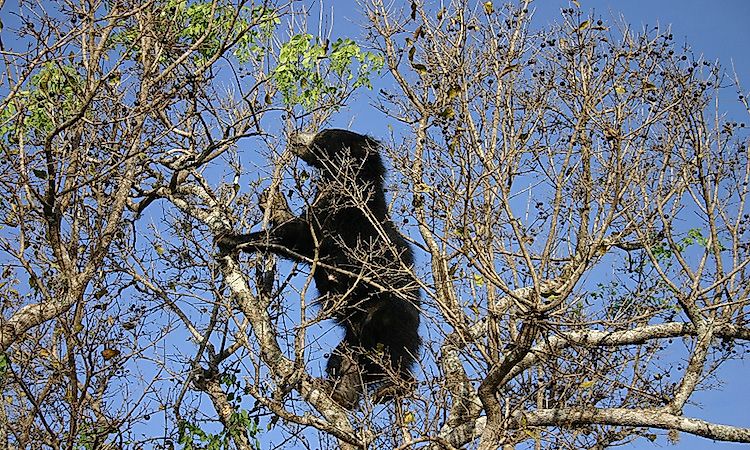
The sloth bear or the labiated bear (Melursus ursinus) is an insectivorous, nocturnal bear that lives in the Indian subcontinent. Sloth bears take lankier builds, shaggy coats, and peculiarly adapted mouthparts for sucking insects. The bears feed on honeybee colonies, fruits, and termites. For years, these bears take been used as performing pets, merely the exercise has been stopped by law in Republic of india. The bears have also been hunted extensively for food, claws, and bacula.
6. Spectacled Behave
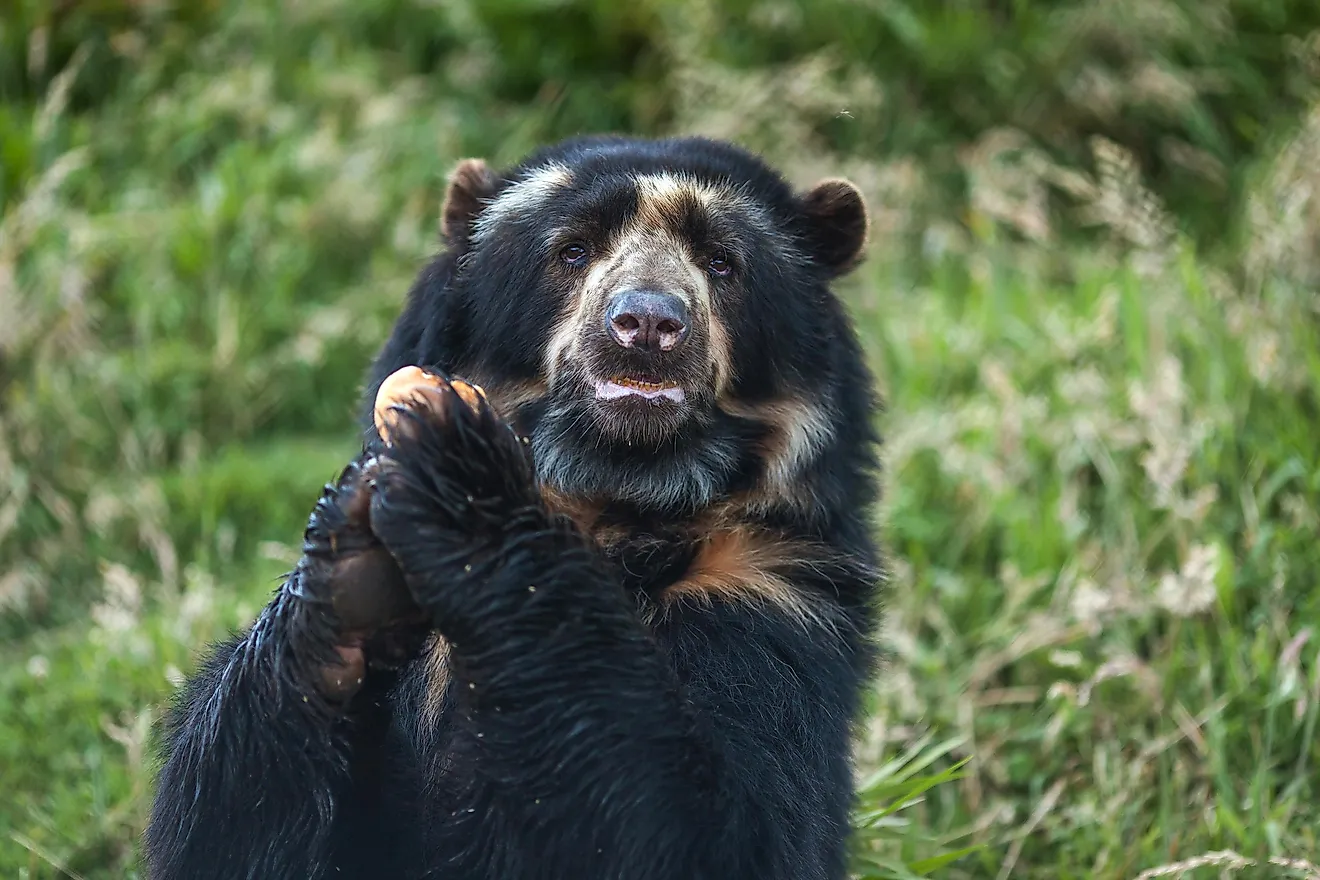
The spectacled acquit or the Andean bear (Tremarctos ornatus) is the only extant acquit species that is native to South America and the Tremarctinae family'due south simply surviving fellow member. The spectacled bear is found in the Andes Mountain region in the countries of Colombia, Bolivia, Republic of peru, Republic of ecuador, Venezuela, and Argentina. The bears prefer to inhabit humid montane forests in their range. The spectacled carry is classified as vulnerable since habitat loss has caused a decline in the numbers of these animals. Poaching for bays hunting, pet trade, natural products merchandise, human persecution, killings for magical and religious beliefs, etc., also threatens the survival of the spectacled comport.
5. American Black Behave
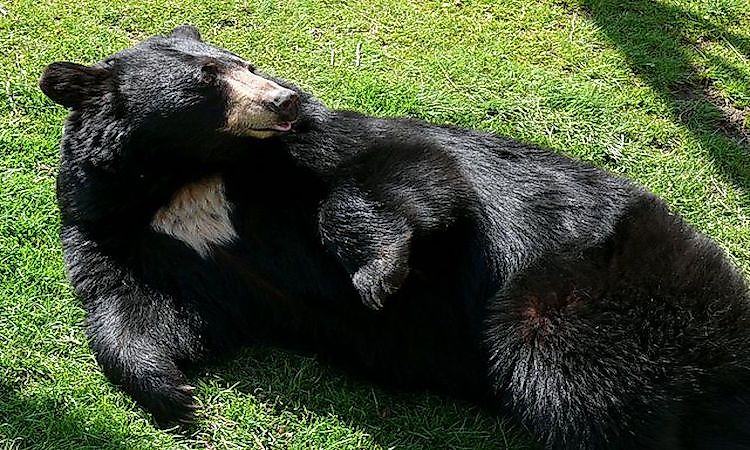
The American black carry (Ursus americanus) is a native Northward American bear. It is the smallest bear in North America and also the most widely distributed one in the continent. Information technology is too the earth'due south most mutual carry. The bears are omnivores with seasonal and geographical variations in nutrition.
The subspecies of the American black comport include:
Olympic black comport, Eastern black bear, California black bear, Haida Gwaii black deport, Dall black bear, Queen Charlotte black bear, Mexican blackness bear, Cinnamon bear, Glacier acquit, Florida black carry, Newfoundland black comport, Kermode bear, spirit carry, Louisiana black comport, West Mexico black bear, Kenai black deport, and Vancouver Island black acquit.
iv. Asian Black Bear
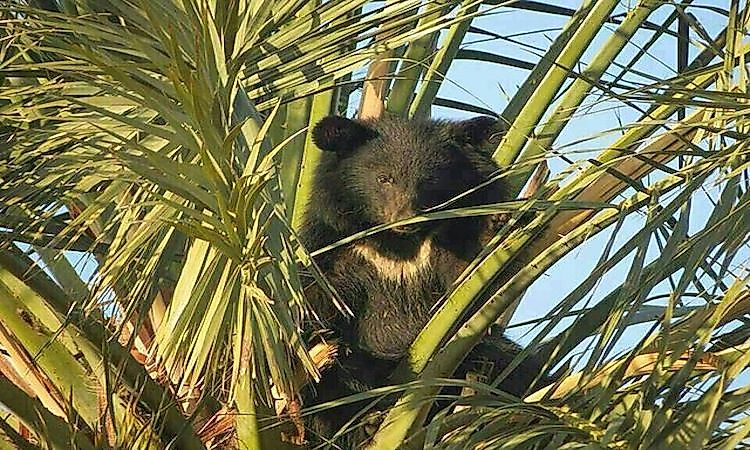
The Asian blackness bear (Ursus thibetanus), commonly known every bit the moon bear or the white-chested bear, is a medium-sized bear that lives in the northern parts of the Indian subcontinent, northeastern Cathay, Russian Far East, Korea, Taiwan, and some islands of Japan. Hunting of the bear for its body parts and loss of habitat take resulted in the nomenclature of the bear equally vulnerable by the IUCN. Unfortunately, the largely herbivorous Asian black comport can pose a threat to humans who have trapped and killed them for years and hence triggered a hatred for humans in these bears.
The subspecies of the Asian black behave:
Formosan black bear, Baluchistan bear, Indochinese black bear, Japanese blackness conduct, Himalayan black bear, Tibetan black bear, and the Ussuri black carry.
3. Brown Conduct
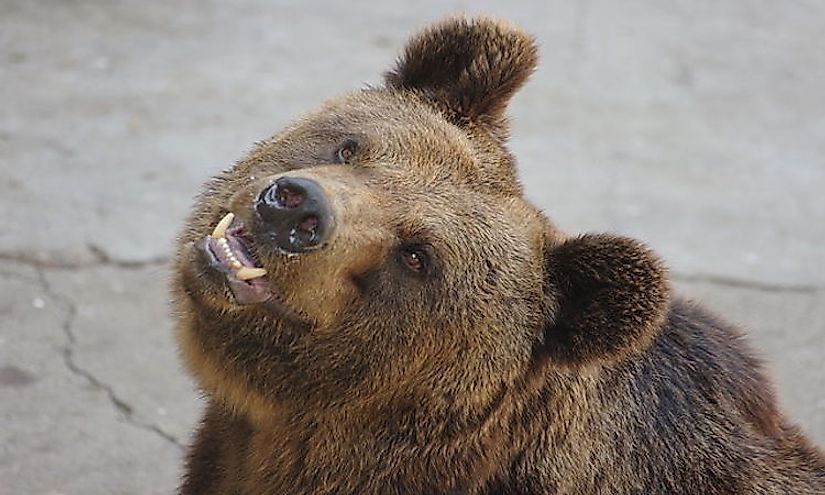
The brown deport (Ursus arctos) is the world's most widely distributed species of behave that is found throughout big parts of Northward America and Eurasia. The brownish behave and its sister species, the polar deport, are regarded as one of the 2 biggest terrestrial carnivores living in the world today. Though the population of these bears has greatly reduced from what it used to exist at the turn of the 20th century, it is nonetheless to enter the threatened category in the Red Listing due to its widespread distribution. Still, sure subspecies of this dewdrop are in great danger while certain others accept already been hunted to extinction.
The various subspecies of the brownish bear are:
Eurasian chocolate-brown bear, Kamchatka chocolate-brown behave, Due east Siberian dark-brown bear, Himalayan chocolate-brown behave, Tibetan blueish bear, Ussuri dark-brown comport, Syrian chocolate-brown conduct, Dall Isle brownish bear, Grizzly deport, Grizzly bear, and the Mexican grizzly acquit.
ii. Polar Bear
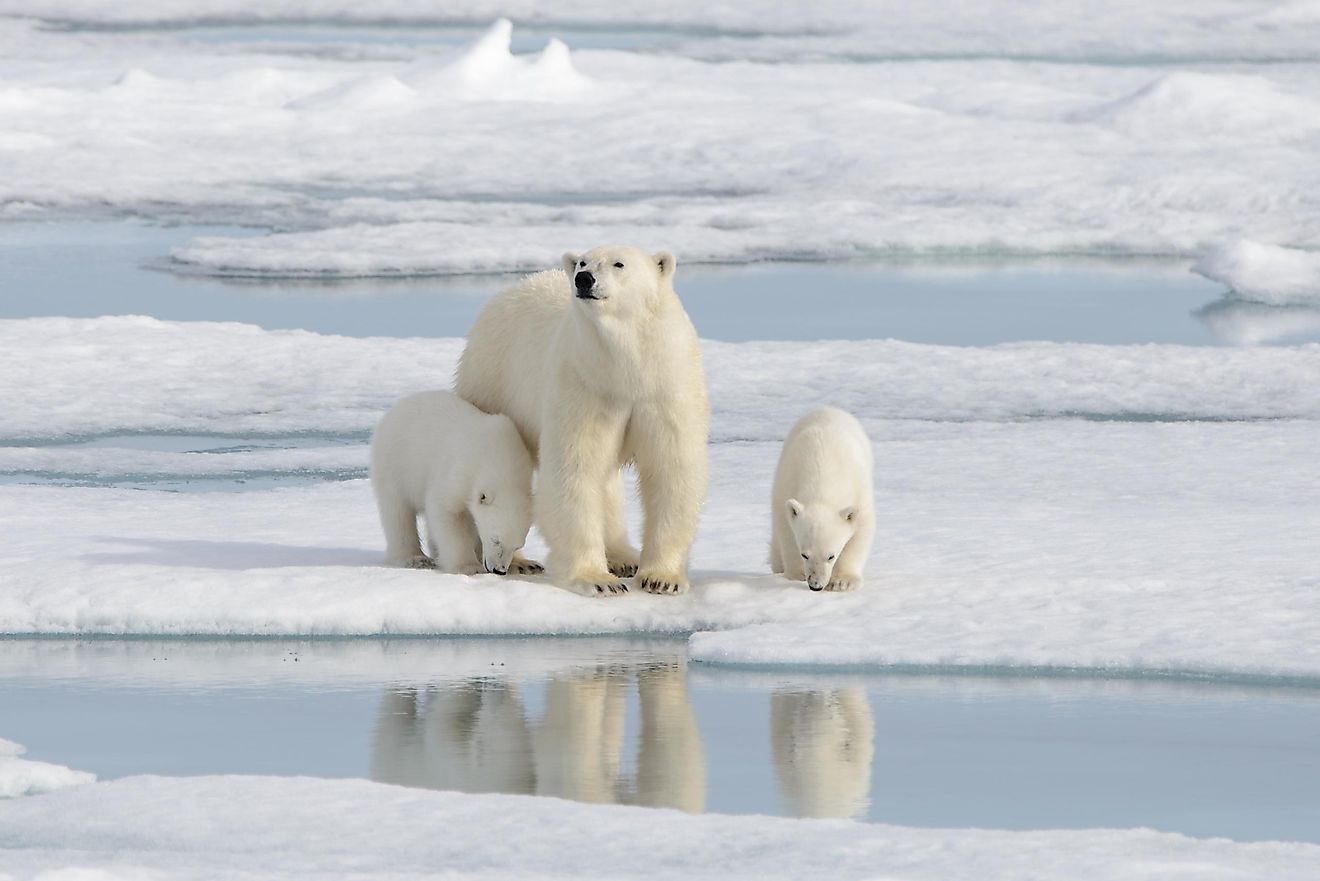
The polar bear (Ursus maritimus) is a carnivore that by and large lives within the limits of the Arctic Circle. Though a sister species of the brownish deport, the polar comport has evolved to develop many characteristics that help it to survive in the farthermost environment where information technology lives. Seals are the preferred nutrient of these bears. Though about of the bears are born on country, they are excellent swimmers and spend a large part of their life in the frigid waters of their habitat.
Polar bears are today classified as a vulnerable species, and climate change is the biggest enemy to this animate being. At to the lowest degree 3 of the 19 subpopulations of the polar bear are in decline. Though large-scale hunting of these bears has been brought under control via numerous regulations, the loss of habitat continues to threaten the survival of this species.
one. Giant Panda -
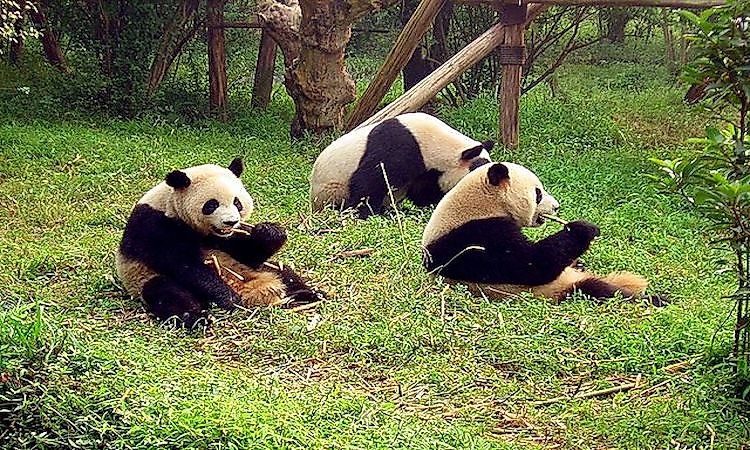
The giant panda (Ailuropoda melanoleuca) is one of the most popular species of bears that is native to s-central China. It is known for its distinctive advent, blackness and white colour, and distinctive black patches around the eyes, ears, and round body. Over 99% of the giant panda'southward diet consists of bamboo. However, the animals are omnivores and might fifty-fifty feed on birds, carrion, and rodents. Large parts of the bear'due south habitat have suffered massive degradation due to deforestation, farming, and other developmental activities. Despite conservation efforts being speeded up to save the giant panda, the acquit species is classified every bit vulnerable by the IUCN.
Source: https://www.worldatlas.com/articles/how-many-types-of-bears-are-there.html
0 Response to "How Many Babies Do Bears Have How Many Babies Do Brown Bears Have"
Post a Comment